
One end cap, one new category
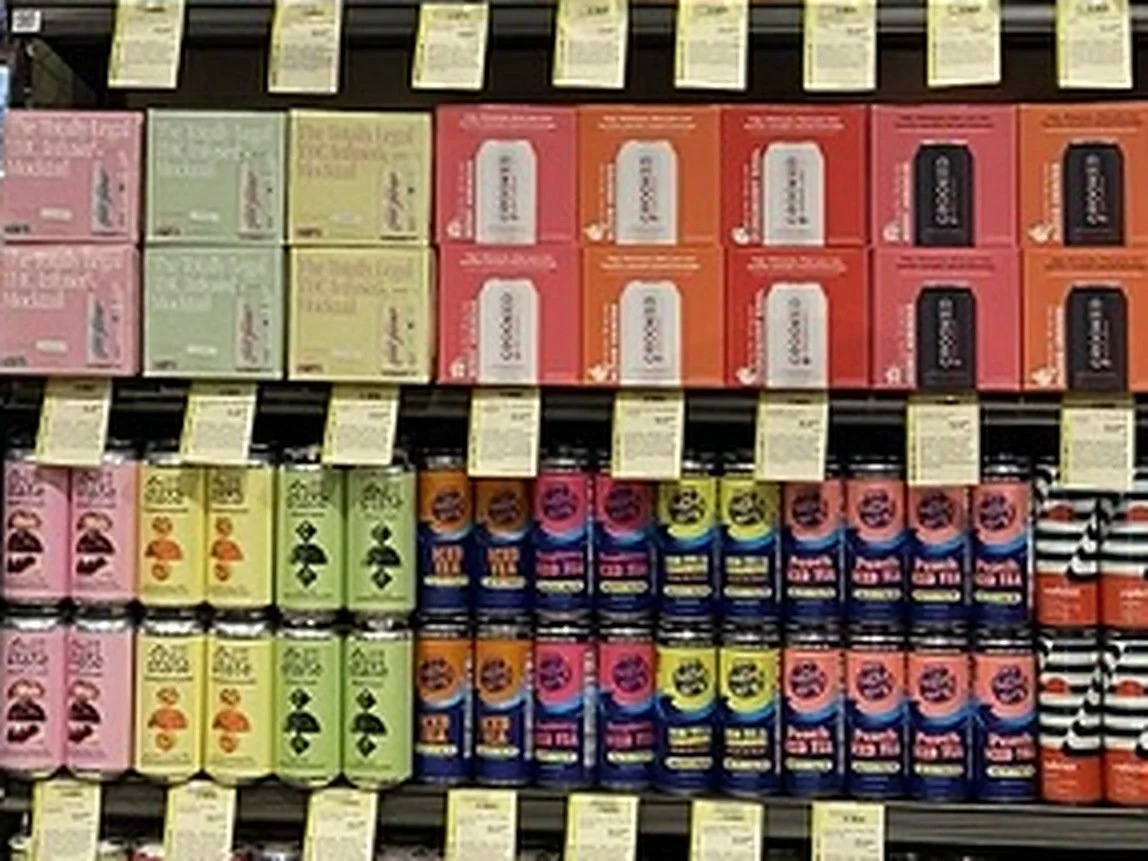
The photo shows an end cap at Total Wine & More in Texas. Every can on it belonged to a brand I worked with.
That shelf was the retailer's first step into a category that barely existed a year earlier: functional drinks for the general market, many of them non-alcoholic, with several brands carrying two versions side by side. A buyer does not hand a full end cap to a category nobody has proven. Someone has to walk in with a set that already makes sense.
Two of those brands, Calexo and Long Coast, came through The Brand Accelerator from concept to shelf. We worked on the liquid brief, the package, the price ladder, the co-packer and the sell sheet the buyer actually read. The other brands on that end cap were in the portfolio I advised through my former company. Putting them together gave the buyer what a single brand never could: a complete category story in one meeting.
That is the part founders underestimate. Launching is not getting a product made. It is getting a buyer to say yes to something they have never sold before, then getting a shopper to pick it up a second time.
The same work has taken other founders from an idea to a shelf. Micah Hyde, the former Buffalo Bills safety, came to us with a concept and walked away with Hyde's Hail Mary on shelf. Siptiva earned its placement at Total Wine & More in Virginia. Different brands, same sequence: make the decisions in the right order, then walk into the room ready.
If you have an idea, or you are about to sign with a co-packer, this is the moment the expensive mistakes are made or avoided.
